
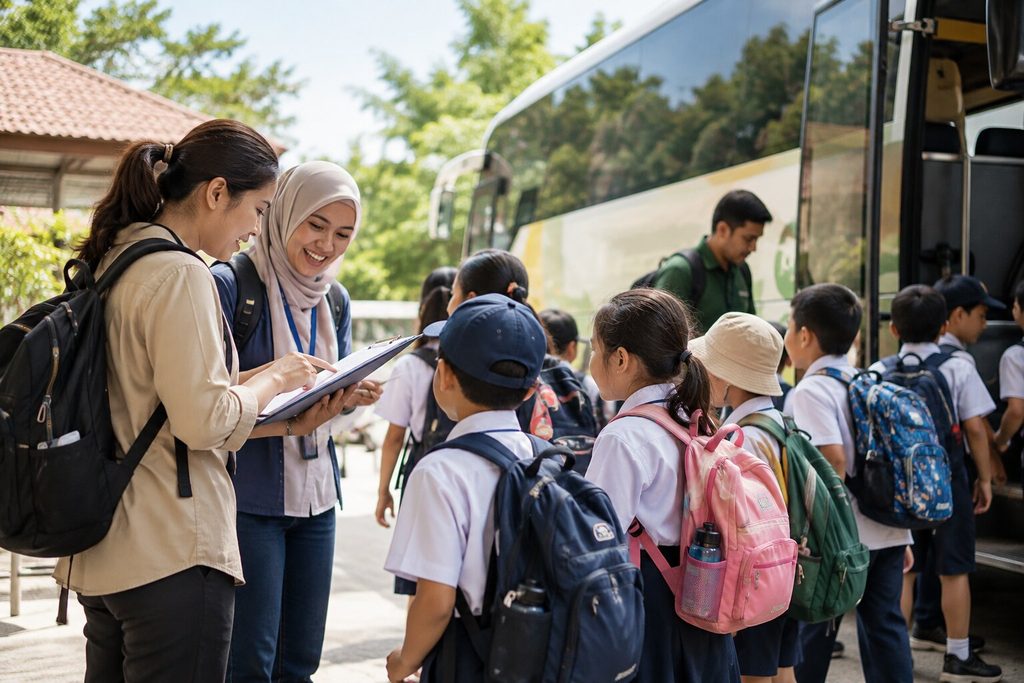
Planning your first school field trip? You might be wondering where to start, what activities to choose, and what you need to prepare before the big day.
Don’t worry—it doesn’t have to be complicated. Whether you’re planning a STEM programme, farm visit, camping trip, petting zoo experience, or cultural activity, having a simple plan can make the whole process much easier.
Here’s a straightforward guide to help teachers and parents plan an educational field trip in Malaysia, even if it’s your first time.
Step 1: Decide What You Want Students to Learn
Before choosing a place or programme, start with one simple question:
“What do I want the students to learn from this trip?”
Your goal could be to introduce students to STEM, nature, animals, culture, teamwork, or practical life skills.
For example:
- STEM programme → science, technology, problem-solving and creativity
- Farm visit → plants, food, farming and sustainability
- Petting zoo → animals, habitats and animal care
- Camping → teamwork, independence and outdoor skills
- Cultural activity → Malaysian heritage and traditional games
Once you have a clear learning goal, it becomes much easier to choose the right field trip.
Step 2: Choose the Right Type of Field Trip
Now that you know what students should learn, think about what type of experience would suit them.
You don’t always need to choose a traditional educational attraction. A field trip can take many forms.
STEM and Technology
Looking for something related to science and technology? Consider a STEM education in Malaysia programme where children can experiment, build, code, and solve problems.
If you’re wondering about the meaning of STEM, it stands for Science, Technology, Engineering and Mathematics.
Nature and Animals
For younger children, nature-based activities can be a great starting point. Think about a farm, butterfly park, bee farm, petting zoo, or other outdoor learning experience.
Students could learn about plants, animals, insects, stingless bees, ecosystems, or where their food comes from.
Culture and Heritage
A cultural field trip can introduce students to Malaysia’s heritage through food, traditional activities, and Malaysian traditional games.
Games such as congkak can turn a simple cultural lesson into something students can actually participate in.
Step 3: Make Sure the Activity Suits the Students
Not every activity will work for every age group.
Before booking, consider:
- Is the activity suitable for their age?
- Can all students participate?
- Is it too physically demanding?
- Will students be interested in the topic?
- Does the programme have enough hands-on activities?
The reference guide also recommends considering the age of students when planning activities, especially when a group includes different age ranges.
A good field trip should be challenging enough to be interesting, but not so difficult that students feel overwhelmed.
Step 4: Check the Programme, Not Just the Place
Found a nice-looking location? Don’t book it just yet.
Find out what students will actually do when they get there.
A good educational field trip should have activities that encourage students to participate rather than simply walk around and look at things.
Look for:
- Hands-on activities
- Educational content
- Experienced facilitators
- Teamwork or problem-solving
- Activities appropriate for the students’ age
- A clear programme structure
For example, visiting a farm could simply mean looking at plants—but a structured farm programme could allow students to plant, harvest, explore and learn about farming.
The experience is what makes the field trip meaningful.
Step 5: Plan Your Budget and Transport
Once you’ve chosen the programme, work out the practical side.
Consider:
- Programme fees
- Transportation
- Food and drinks
- Additional activities
- Teacher or adult participation
- Emergency funds
You don’t necessarily need the biggest budget to have a good field trip. The goal is to find an experience that provides good learning value for the students.
For longer trips such as school camping, remember to consider additional costs for accommodation, meals and equipment.
Step 6: Check Safety and Student Information
This is one of the most important steps for teachers and parents.
Before the trip, check the provider’s safety procedures and make sure you know who is responsible for the students during each activity.
It’s also important to collect relevant student information, such as:
- Emergency contact details
- Allergies
- Dietary requirements
- Important medical information
- Permission forms
The reference guide recommends collecting student details and dietary or allergy information before the trip, as well as making sure important documents are organised and accessible.
Don’t leave these preparations until the last minute.
Step 7: Tell Parents and Students What to Expect
Once everything is planned, communication is key.
Students will be more excited when they know what they’re going to experience. Parents, meanwhile, will want to know that their children are going somewhere suitable and that the trip has been properly planned.
Share simple information such as:
- What the students will be doing
- What they need to bring
- What they will learn
- What they should wear
- Important safety information
- Transport arrangements
When communicating with parents, focus on both what their children will experience and what they will learn.
Step 8: Prepare a Simple Backup Plan
Outdoor activities are fun, but the weather doesn’t always cooperate.
If your field trip involves a camping site, farm, outdoor games, or nature activities, check whether there is an alternative activity if it rains.
Having a backup plan means you won’t have to completely change the day when something unexpected happens.
Even a few simple indoor games or activities can help fill unexpected gaps in the schedule.
Step 9: Let Students Reflect After the Trip
The trip doesn’t have to end when everyone gets back to school.
Give students a chance to talk about what they experienced.
You could ask:
“What was your favourite activity?”
“What is one new thing you learned?”
“What surprised you?”
Students could also create a drawing, short presentation, video, or group activity about their experience.
This helps turn a fun day out into a learning experience they can remember.
Ready to Plan Your First Field Trip?
Planning an educational field trip doesn’t have to feel overwhelming. Start with the learning goal, choose an activity that suits your students, check the programme and safety details, communicate with parents, and prepare for the unexpected.
Most importantly, remember that a field trip doesn’t have to be complicated to be meaningful.
A STEM activity, farm experience, camping adventure, petting zoo visit, bee farm, or Malaysian traditional games session can all become valuable learning opportunities when children are given the chance to participate and explore.
For parents and teachers looking for educational activities for kids and school trip ideas in Malaysia, explore GogoKids to discover experiences designed to make learning fun beyond the classroom.